The blog ·
Website design: how can you tell if your website is (or will be) well designed?

Whether free or paid, built in-house or outsourced to an agency: a website is judged by what it brings to the business. Here’s how to assess your own in a few minutes, what signs to look out for to know it needs a revamp, and the questions to ask yourself before starting to build a website.
Check your website in a few minutes
Free tools measure a website’s technical quality. Run them on your own site, then compare it with a site you consider successful — ours, for example:
- PageSpeed Insights, Google’s tool: loading speed on desktop and mobile, and what’s slowing it down. Compare this with the results for the AmaZili website;
- GTmetrix, which breaks down loading times page by page;
- EcoIndex and Website Carbon, for a page’s carbon footprint. Compare with the AmaZili website’s carbon footprint.
A poor score isn’t a death sentence, but it does tell you where to look. If the results leave you puzzled, we’ll go through them with you: the assessment is free.
Six signs it’s time to revamp your website
The design is outdated
Many companies entrusted their first website to:
- an IT developer, skilled at writing management programmes, but not necessarily at everything else;
- a friend who dabbles in a bit of everything and builds websites for mates;
- a printer, because, after all, printing is a form of communication;
- or worse still, a grandnephew who ‘knows a bit about computers’.
The lack of expertise in graphic design and typography, the failure to optimise content for search engines, and sometimes simply bad taste, weren’t immediately apparent on the first day: everyone was just happy to be online. As the years went by, the somewhat ‘unpolished’ website eventually came under scrutiny. Customers saw it as a sign that the company wasn’t taking itself seriously.
It’s slow, or unreadable on a mobile phone
Some of our clients now receive over 75 per cent of their visits from a smartphone. A website that loads slowly, requires zooming or is difficult to navigate loses these visitors before they’ve even read a single line. And a website still built using Flash no longer displays anything at all: browsers have not supported it since 2021.
It doesn’t appear on Google
In a perfect world, all websites would have an equal chance of appearing on the first page of Google. The world isn’t perfect, and so-called ‘SEO experts’ have long charged thousands of euros for tricks based on link farms and keywords repeated ad nauseam. Google eventually penalised these practices, and the websites that had benefited from them were relegated far down the search results.
Those thousands of euros would have been better spent on a well-designed website, with content that matches your customers’ search queries: this is what we call sustainable organic SEO.
You pay every time you want to make a change
Many older websites, and even some newer ones, were built page by page, by hand: even the smallest change requires programming knowledge. Content management systems (CMS) have changed the game: WordPress for blogs, PrestaShop for online shops, MODX for all types of websites. They allow your teams to publish content without having to go through an agency. No-code tools such as ArteZya go a step further: they require no technical knowledge whatsoever, and assemble each page upon saving rather than on every visit. When displayed, there is almost nothing left to calculate: the pages are lightweight and fast, and your teams can edit them themselves.
It doesn’t share on social media
Showcasing your expertise on LinkedIn, Facebook or Instagram is part of a company’s and its leaders’ communications strategy. However, your pages still need to display correctly there: a title, an image, a summary. An older website often hasn’t been designed with this in mind, and every attempt to share it falls flat.
In five years, it hasn’t brought you a single lead
Websites from a bygone era were designed like the brochures that salespeople leave with clients — in fact, it was often the graphic designer who created the brochure who also designed the website. These showcase websites present the company, but never prompt the visitor to take action. A modern website guides the visitor towards making a call, requesting a quote or signing up: that’s what turns a visitor into a customer.
Before the redesign: the right questions
The first questions we ask ourselves are often: how much will it cost? Who should we entrust the work to? These come too soon. The right questions are these:
- What is my digital marketing and communications strategy?
- Am I visible on Google when someone searches for a product or service that I provide?
- What image of my business do I want to convey?
- Does my website accurately represent my business today?
- How many customers has my current website brought me?
- Do I need new features: a customer portal, an online shop, or an appointment booking system?
- Who will update the website, and how often?
- How will I measure the return on investment?
The answers must be clear. If they aren’t, a communications consultant can help sort things out. Taking stock of the current situation is a good start, and asking a few customers about their expectations often tells you more than any set of metrics.
You don’t build a strategy on a rumour — ‘you absolutely must be on Instagram’ — something nobody would do in any other aspect of the business. Look at what your competitors are doing, both large and small, and take inspiration from those who are successful.
An example: the Alliance Compacts website, from one version to the next
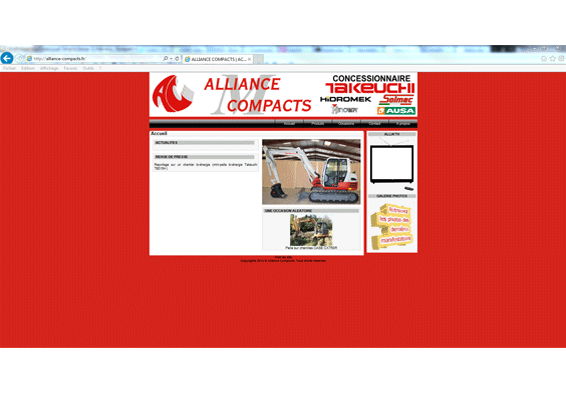
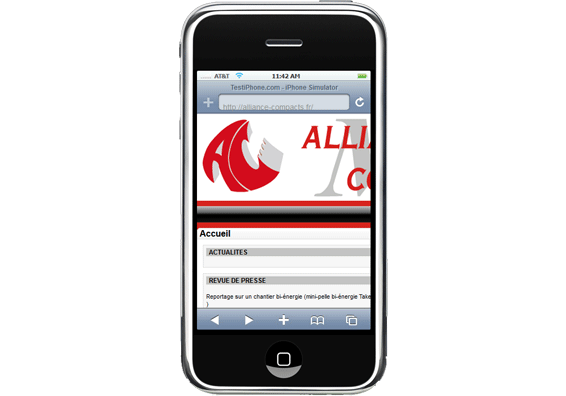
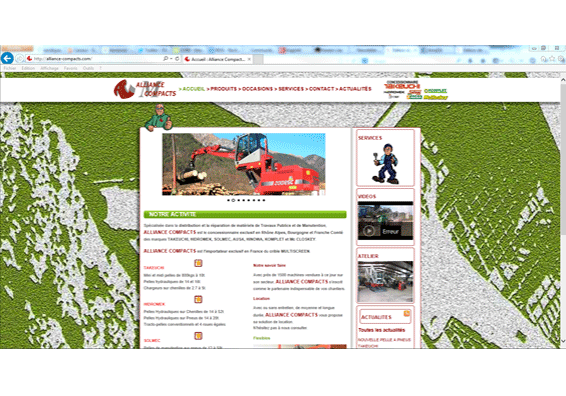
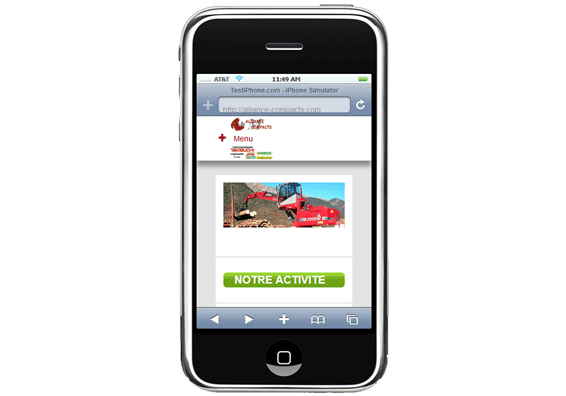
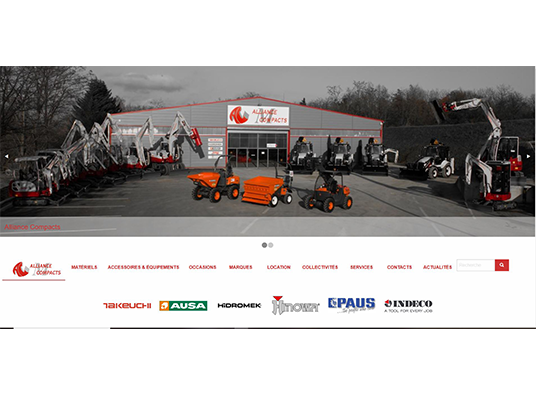
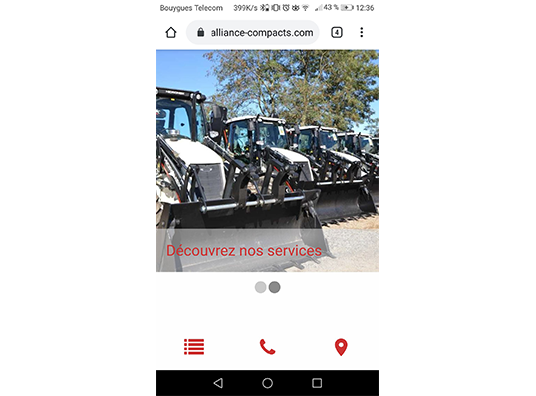
The full story can be found in our post ‘Success story: Alliance Compacts’.
Key considerations
There are certain technical realities that need to be taken into account right from the start of the planning process:
- yes, the world is mobile: your customers search on their smartphones;
- yes, a website must be accessible to everyone, regardless of the device — computer, phone, tablet, Braille display — and regardless of connection speed;
- yes, if your customers are on social media, your pages must be shareable there;
- yes, you must be able to update your website without having to call in a service provider every time;
- yes, you must invest wisely and measure the return on investment;
- and yes, your website must reflect your company’s image.
Why entrust the creation of your website to AmaZili
AmaZili is led by experienced managers whose background in networking dates back to when CERN was connected to the Transpac network via a Prime computer. This long history has taught us to choose technologies that stand the test of time, and open-source tools that our clients retain control over.
- Content is at the heart of our approach, both text and images: this is the only way to ensure a website is useful and visible in search engines.
- We have worked with open-source content management systems from the very beginning and contribute to their development. We have been proficient in MODX since 2007, as well as WordPress and PrestaShop.
- For over ten years, we have been designing every website with mobile in mind, using responsive web design.
- We were amongst the first to produce websites as progressive web apps, which continue to function even when offline.
- We advise start-ups, retailers and long-established businesses on their digital strategy, and we set up audience measurement tools to assess the results.
A website design agency serving the Vienne, Lyon, Valence and Saint-Étienne areas
Based near Annonay, we support businesses in Vienne, Lyon, Valence, Saint-Étienne and Grenoble, and more broadly across the entire Auvergne-Rhône-Alpes region. A meeting at your premises is often the best way to kick off a project.
To find out more: